Daggerheart Compatible
Everything else you use for Daggerheart helps you play. This is what remembers it.
Threadfall listens while you play, keeps your table’s world at your fingertips, and turns the night into a written chapter and a codex your players can actually read back.
Questions
What is Threadfall at a Daggerheart table?
It runs quietly beside you while you play. It hears the session, keeps your party and your world one glance away, and when the night ends it gives you back a written chapter and a codex of everyone the table has met. You run the game. Threadfall keeps the record, so you are not the one taking notes at two in the morning.
What is on screen while I’m running?
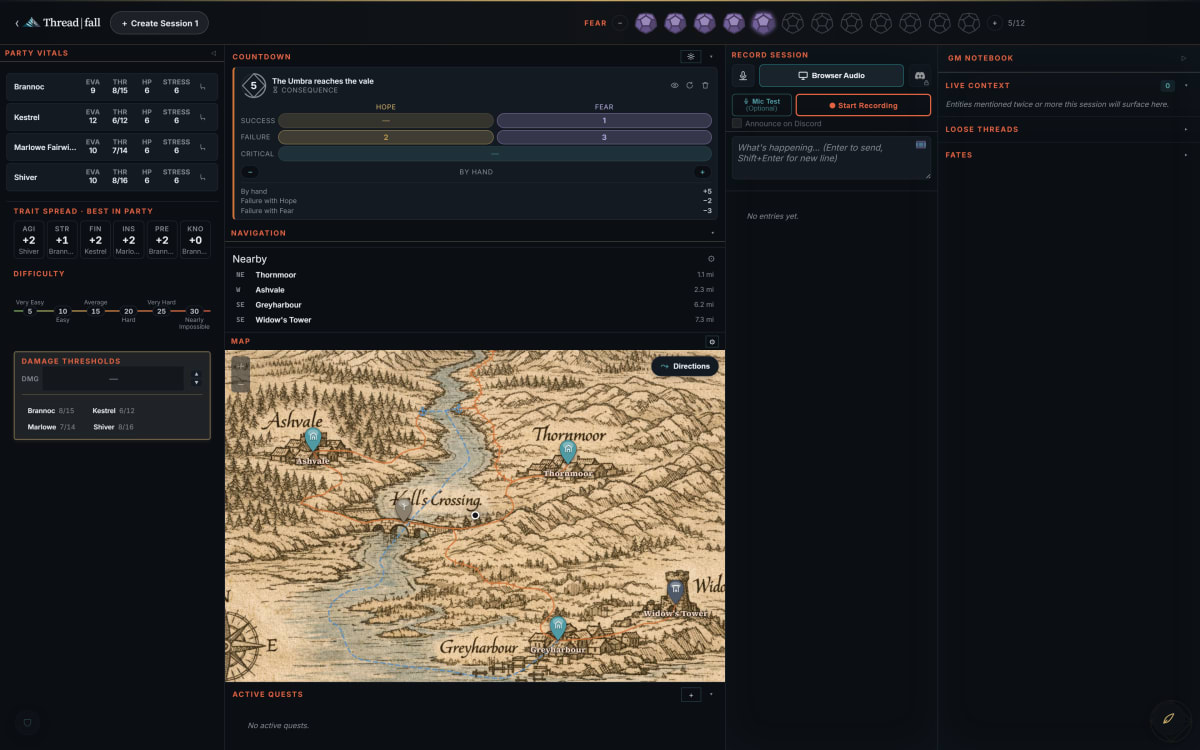
Your Fear pool, front and centre, twelve pips you tap as it rises and falls. Any countdown you have running, showing as a real die that turns as the rolls land, and anything you marked hidden stays yours until you say otherwise. Your party’s Evasion, thresholds, traits and Experiences one glance away, so when the spotlight swings to the quiet one you already know what they can do. And a GM notebook that fills itself in while you play: whoever the table keeps circling back to surfaces there on its own, next to the threads still hanging from earlier sessions.
How do countdowns work?
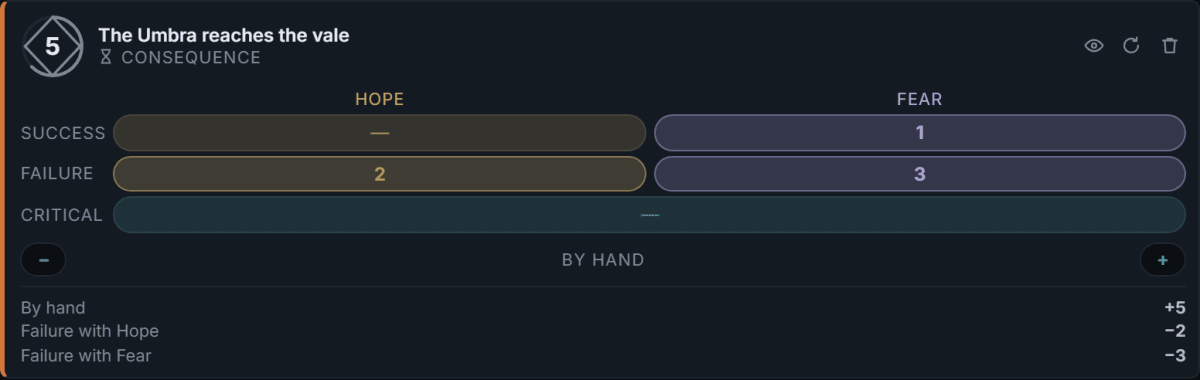
Name it, choose whether it is progress toward something or a consequence closing in, and give it a number. It comes up as an actual die at that value, the way it would sit on your table. Then you play, and after each roll you tap what happened, success or failure, with Hope or with Fear, and the die turns. It stops at zero and waits for you, because what happens when a clock runs out is yours to play, not the app’s to fire.
Can I run a clock my players can’t see?
Yes. Hidden means hidden: it does not appear on a player’s screen in any form, not greyed out, not locked, not a box with a question mark. They find out when you decide they find out. Reveal it mid-scene and it opens on their screen the moment you do.
What does it know about my characters?
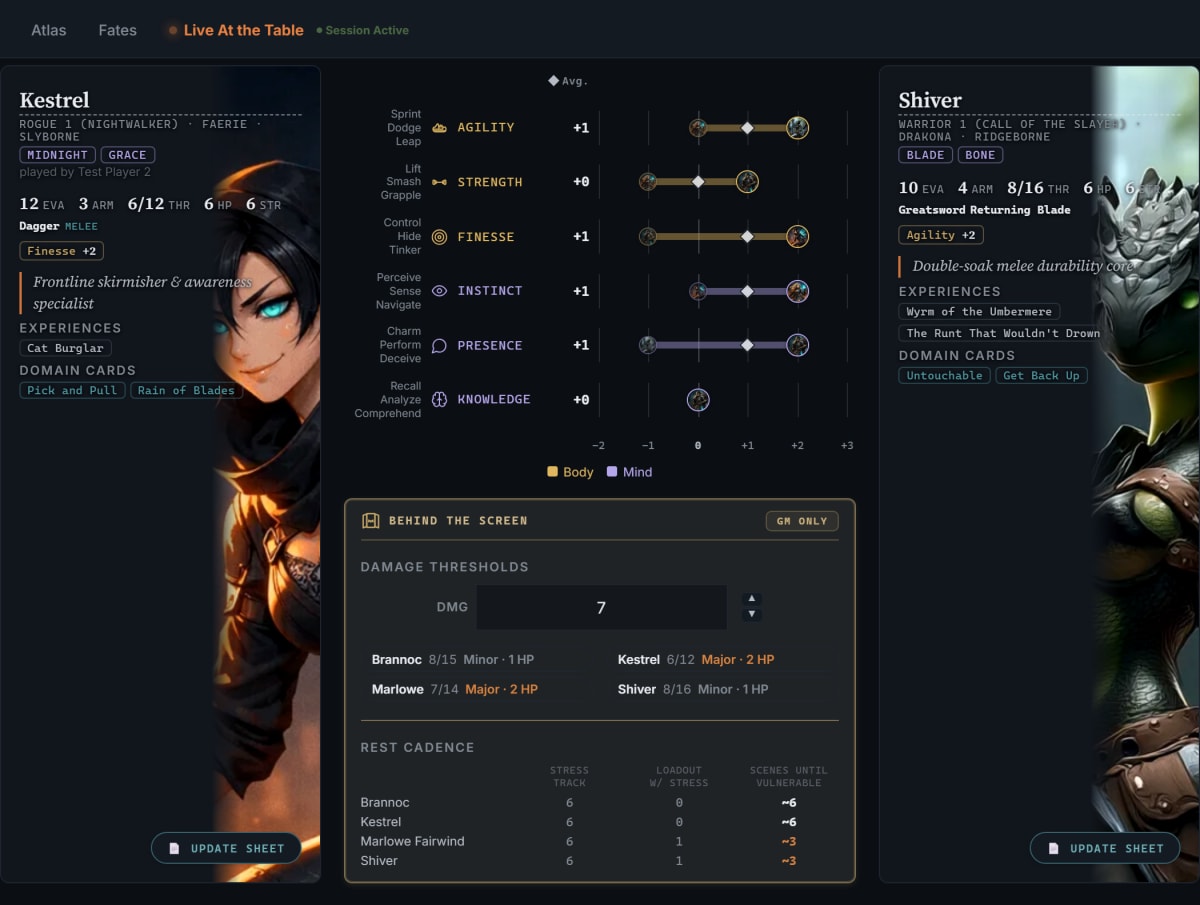
Their traits, Evasion and Armor Score, Hit Points and Stress, damage thresholds, Experiences, weapons, class and subclass, Ancestry and Community, and the domain cards they are carrying, loadout and vault kept apart. It is the sheet as reference, so when a player says “can I do this” you are not waiting for someone to find their character. Behind the Screen, which your players never see, keeps the two numbers you reach for mid-fight: everyone’s damage thresholds, and how much Stress each of them has left before they go Vulnerable.
How do I get characters in?
Paste a Demiplane share link and it reads the sheet. Or photograph the sheet, or a PDF of it, and it reads that. Or type it in, if the character only lives on paper.
What does it do with domain cards?
It knows all 189 from the Core Set, so it knows what your party is actually carrying: which domains, what costs Hope to use, what marks a Stress to recall, what reaches and what does not. Hover a card and its tags come up. That is what feeds the read on your party, so what you get back is about your table’s actual loadouts. It does not hold the card text itself. That is Darrington Press’s to publish.
What does it tell me about my party?
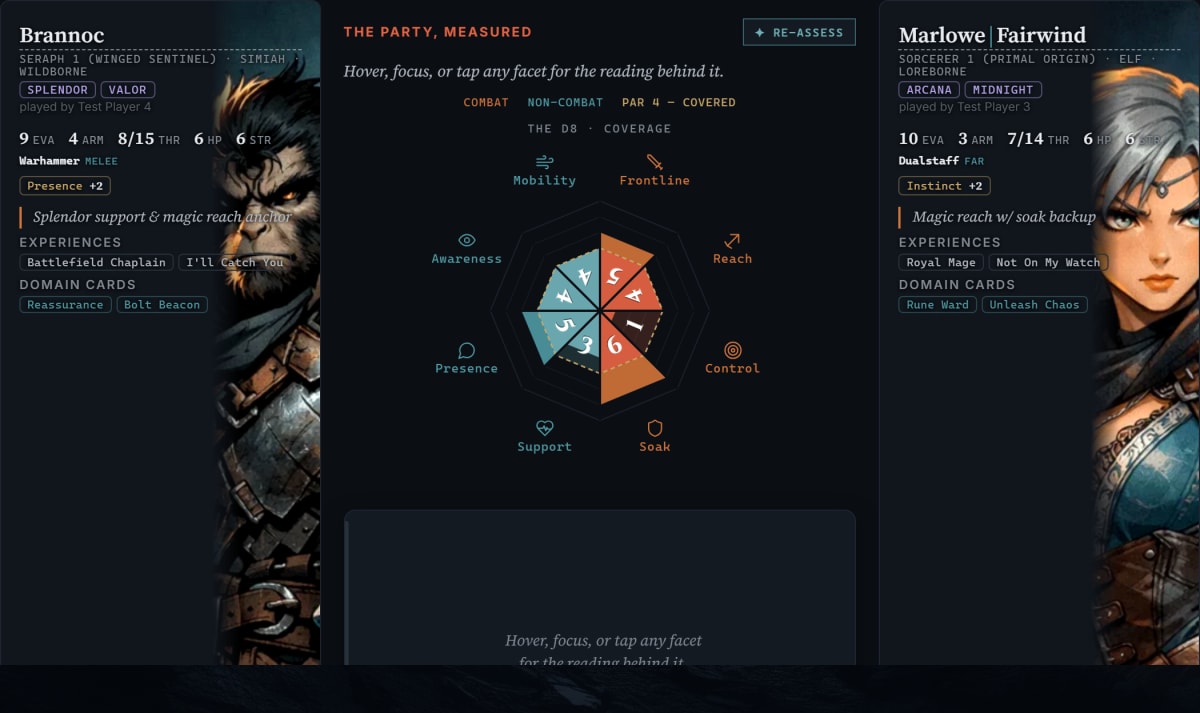
Where they are covered and where they are not, worked out from the cards they are carrying right now rather than from what their classes suggest they should have.
What happens after the session?
You get a chapter. Not a transcript and not bullet points, but the night written down in Daggerheart’s own language, and a codex that grows with it: the people you met, the places you went, the factions circling. Your players can read it back before the next session, which is usually the first time a group realises how much they had forgotten.
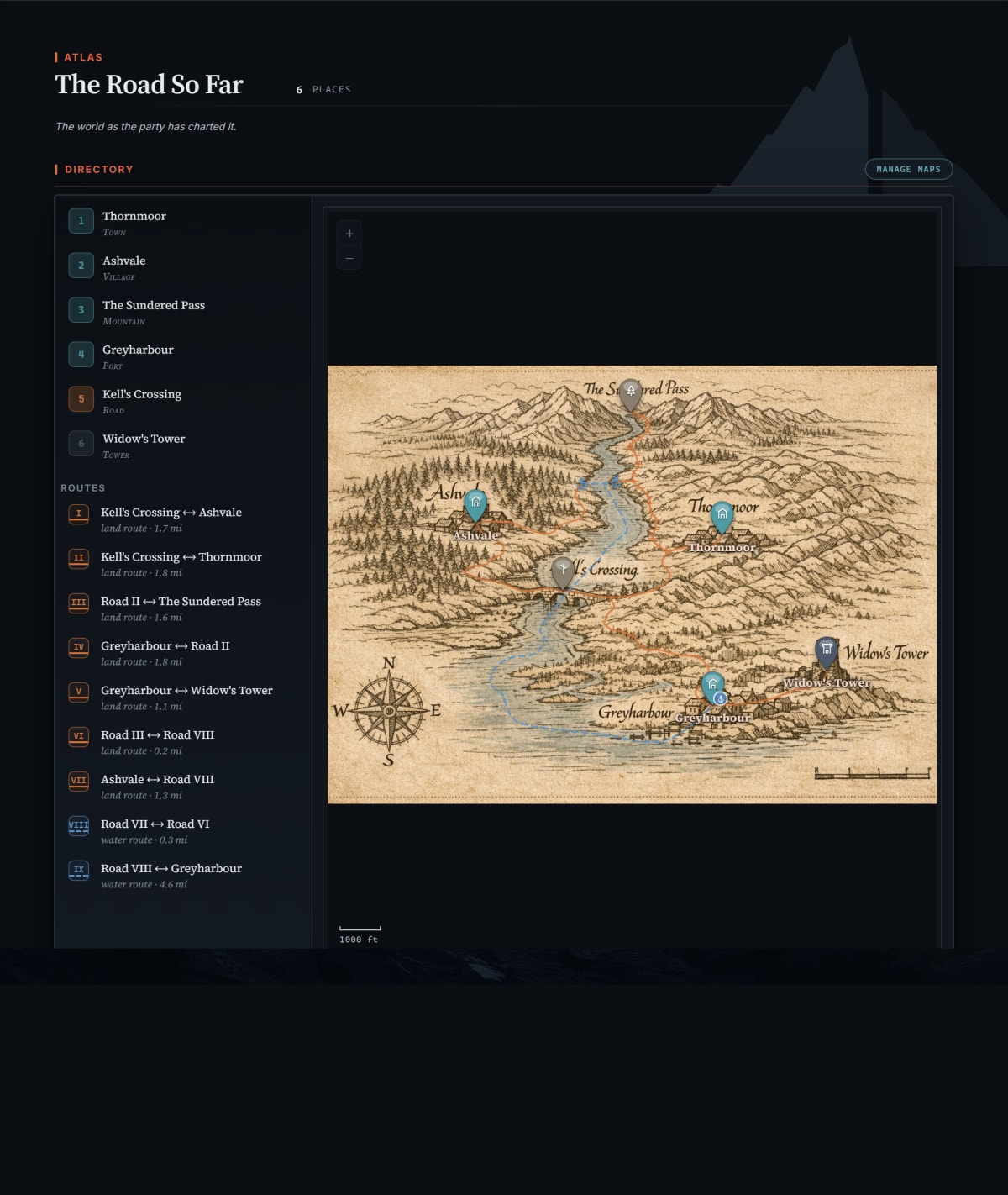
What about the map?
Your map, your places, routes between them with the distance and the rough going marked, and the camps along the way. What it will not do is tell you the journey takes four days. Daggerheart leaves the road to you, so Threadfall does too, and asks instead whether the leg was worth a Fear.
Does it do anything I did not tell it to?
No. It writes up what it heard and holds what you entered. It does not make rulings, does not move your Fear, does not touch a countdown, and does not decide what a roll meant. Nothing changes at your table unless you change it.
Do I need to change how I run?
No. Start the recording and run your session. Everything else is there when you glance at it and out of the way when you do not.
Is this a virtual tabletop?
No, and deliberately. Dice, tokens, live Hit Points and Stress, who has the spotlight right now: that is your VTT’s job or your table’s, and it is a good job done well elsewhere. Threadfall holds the part that otherwise goes missing, which is the campaign itself.
Start a Daggerheart campaign
Choose Daggerheart when you make the campaign and everything follows from it: what the transcription listens for, what your characters carry, what sits on the live screen, and the language your chapters are written in. Then just run your next session. Create a free account; the free tier includes two trial sessions with full AI recaps and needs no credit card.
Daggerheart™ is a trademark of Critical Role, LLC. Threadfall is compatible with Daggerheart™ and is not affiliated with, endorsed by, or sponsored by Critical Role, LLC or Darrington Press.